
A blind spot in sun protection.
The back is the most sun-exposed surface of the body and the most consistently unprotected. Not from negligence — from anatomy. The shoulder joint reaches its rotation limit before the palm meets the scapular zone T3–T9, the area of maximum UV exposure.
The only people who reliably reach their own back are the ones who ask someone else. Most of us, most of the time, do not.
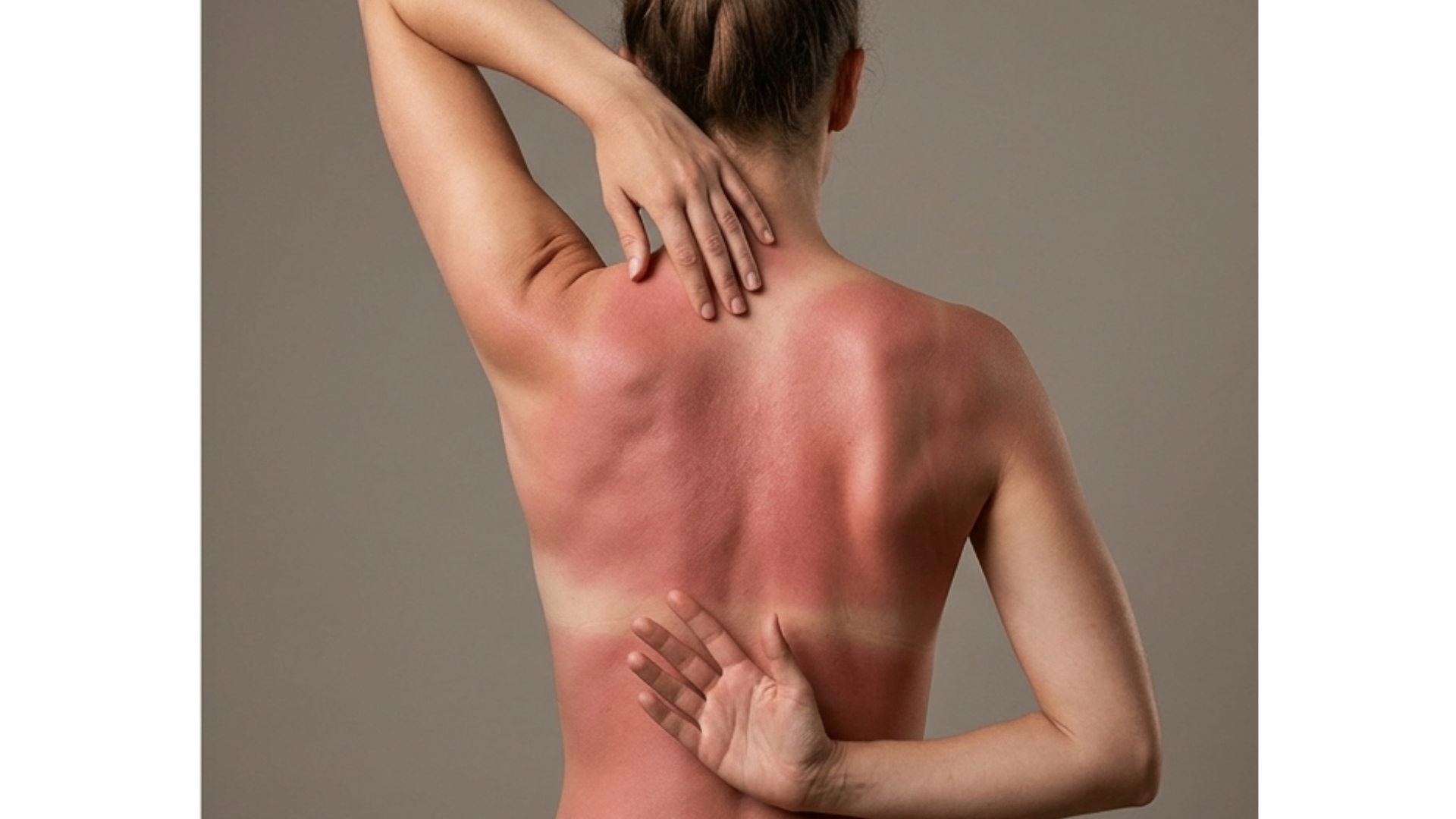
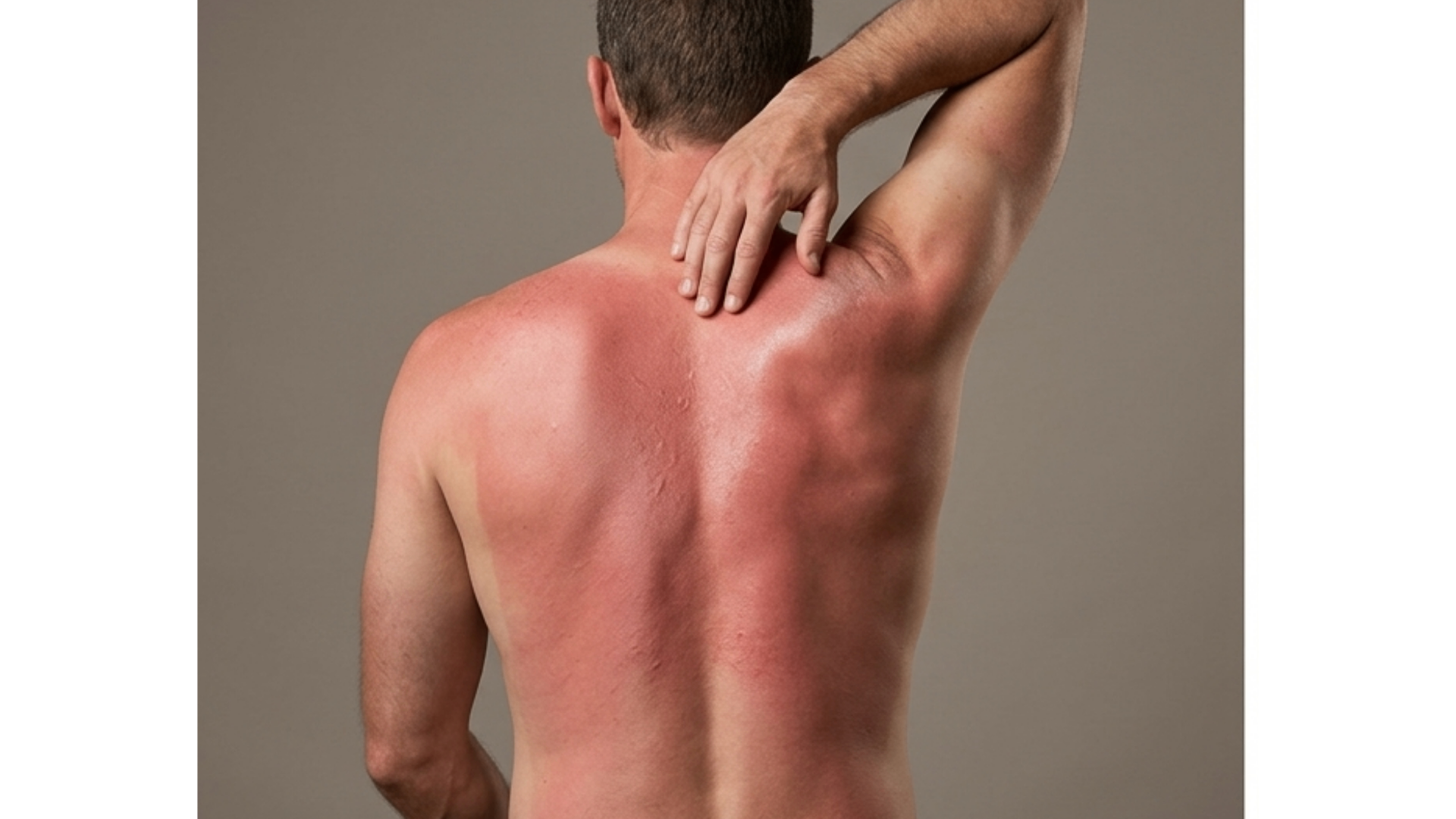
The skin cancer.
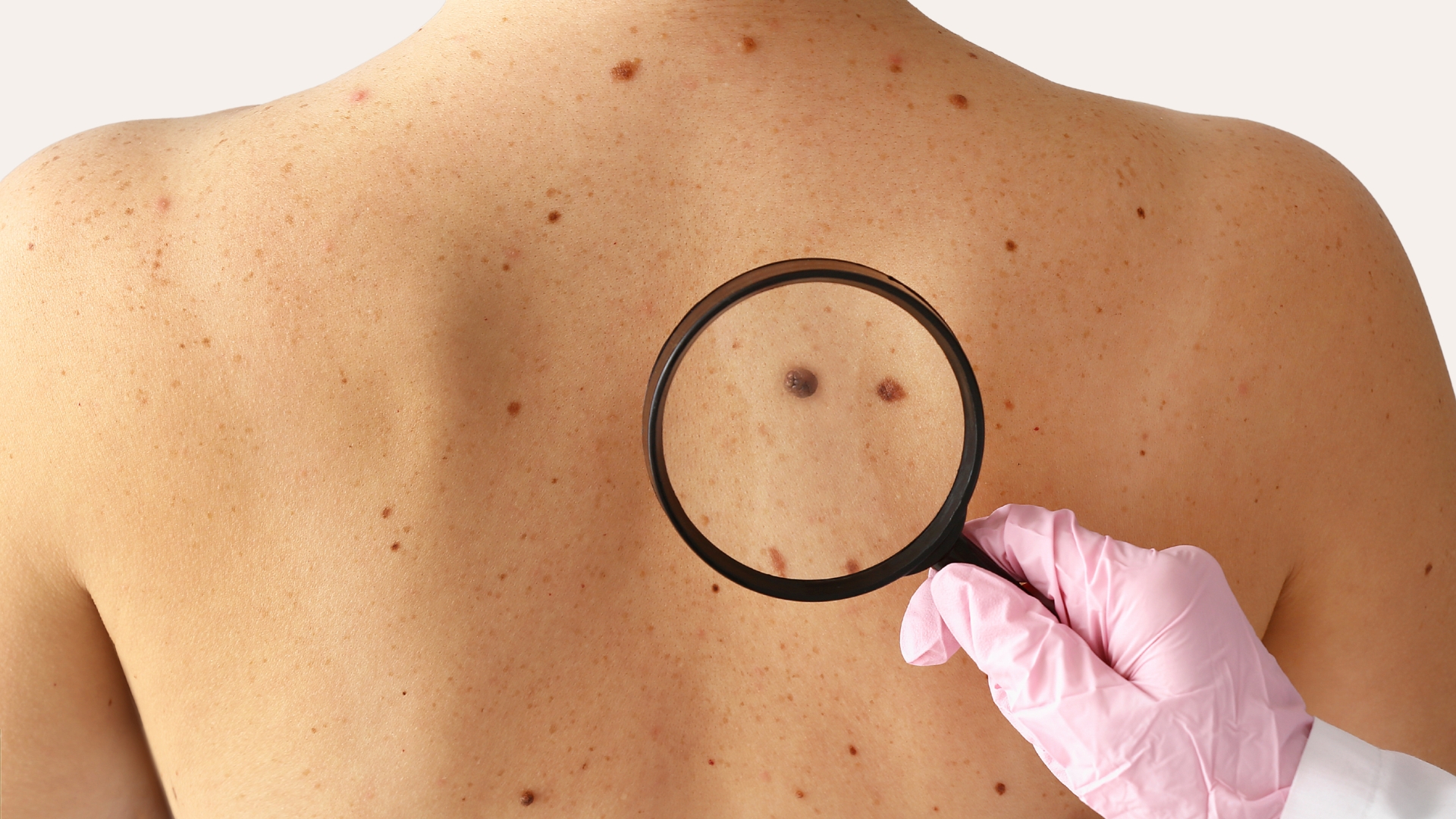
Over 100,000 new skin cancer cases are registered in Europe every year. The back is the number one site of skin cancer diagnosis in men across Western Europe. This is not a coincidence. It is a direct consequence of the back being the most consistently sun-exposed and least consistently protected surface of the body.
UV radiation does not cause a single acute event — it accumulates over decades. Every unprotected summer day on a terrace, at a pool, or on a beach is a compounding risk. The body remembers every exposure. The back pays the price.
UVB radiation in Europe is already rising — climate models project a 1.3% UVB radiation increase per decade through 2100 as cloud cover decreases, extending the high-risk season beyond traditional summer months and into spring and early autumn across the continent.
“The trunk is the most common specific location for skin cancer in males, a pattern directly linked to inadequate and inconsistent back sun protection across a lifetime of outdoor exposure.”
The social friction.
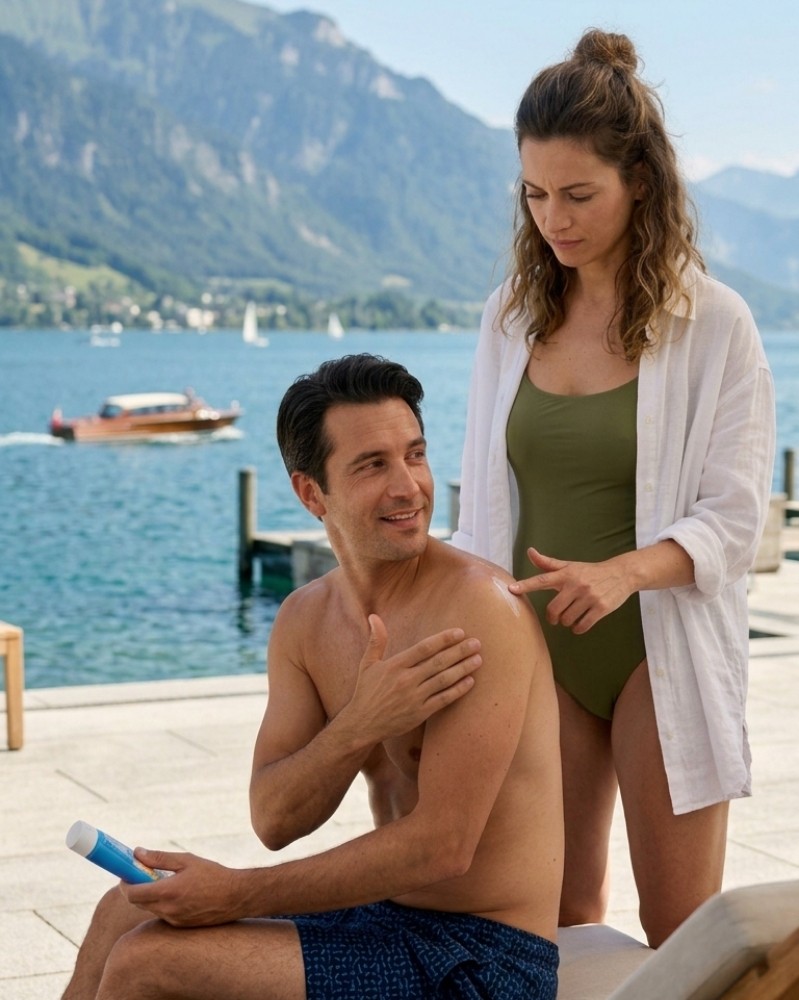
The default workaround for an unprotected back is to ask someone else. This requires a partner, a family member, a friend, or a stranger. In practice, none of these options are consistently available, and several carry a social cost that many people — particularly men — will not pay.
Asking a partner assumes a partner is present. Solo travellers, single adults, and people whose partners remain indoors have no one to ask.
Asking a stranger on a beach requires overcoming a significant social barrier. For many adults — particularly men over 35, the primary skin cancer risk group — this is simply not done. The sunscreen goes unapplied and the back unprotected.